Shall we climb the mountain?
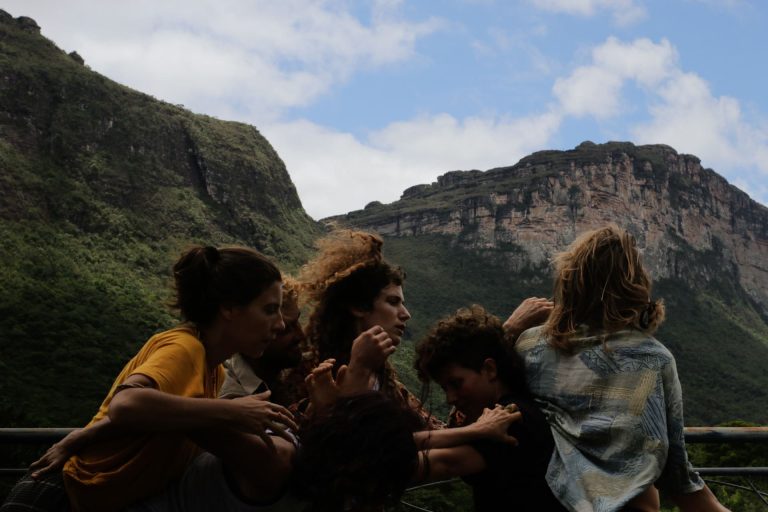
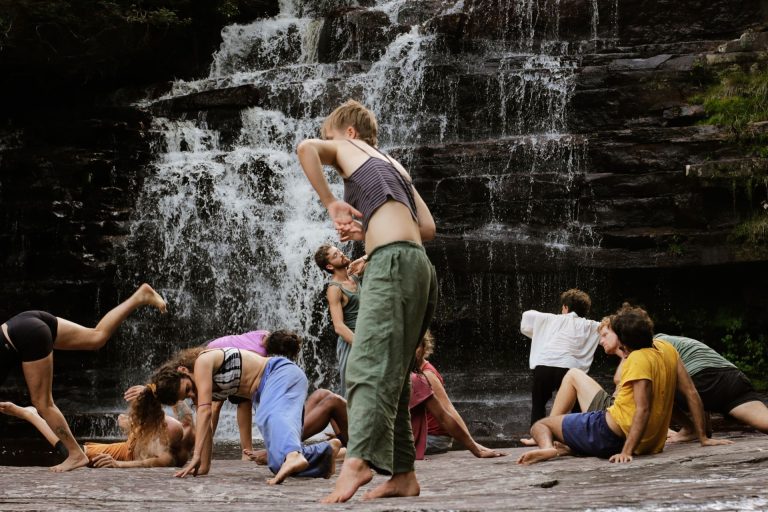
There, where the wind brushes the rocks and the rivers whisper to the trees, the body learns to listen. Here we explore movement—not measured, not goal‑driven, not confined. The body as creature, as plant, as sentient material moving with the world, never against it. A dance that bows to no form. No audience. No pose. Only listening, touch, connection—and a hush of beautiful silence.
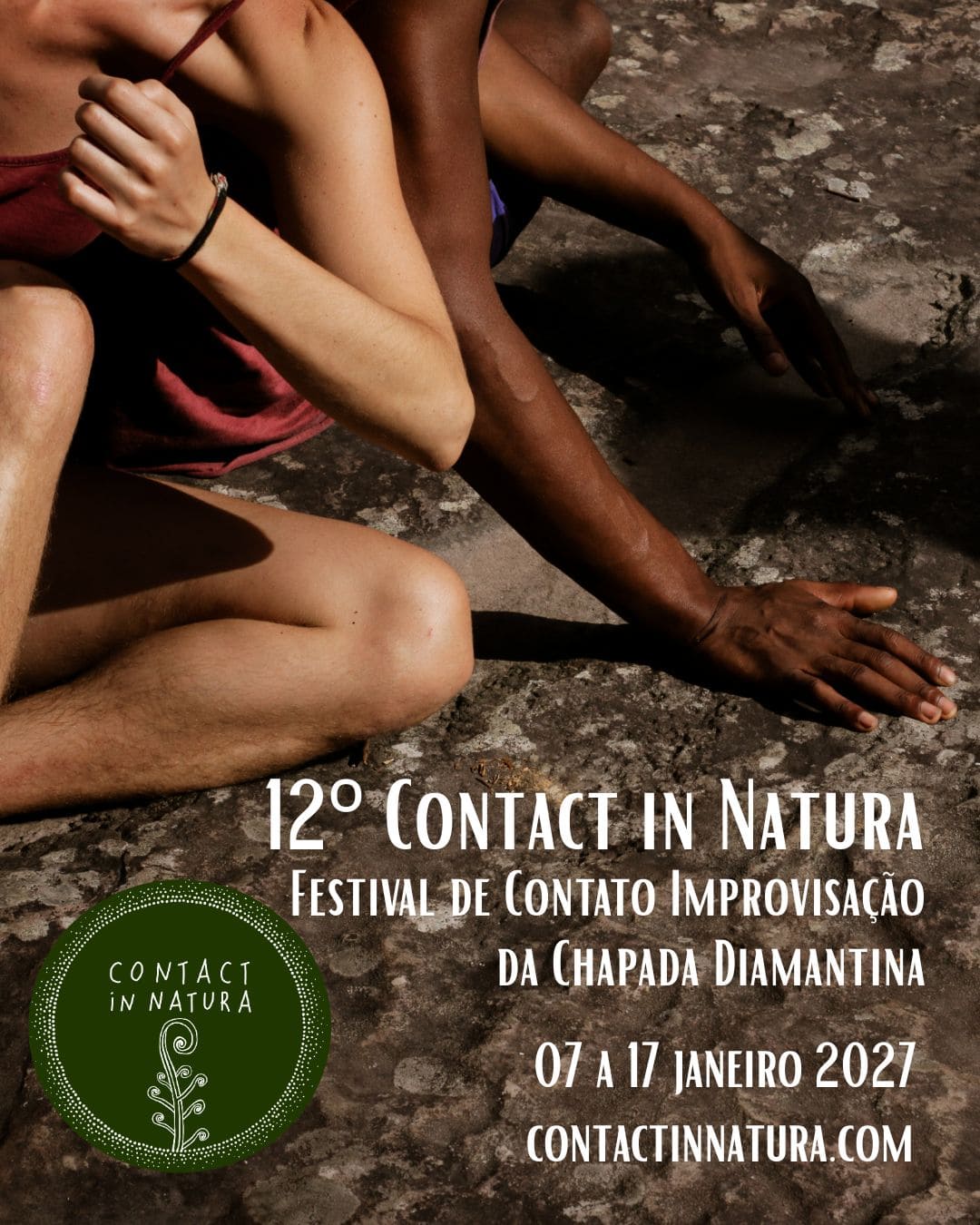
The 11th edition of Contact in Natura once again honors the state of presence, the spontaneous gesture, and the transformative power of sensitive encounters with living landscapes. After more than a decade, the project has become a space for perception, creativity, and the embodied research of nature—not merely as a backdrop, but as a permeating, moving, and shaping environment.
We dance with gravity, with the breeze, and with the unexpected caress of a surprise touch. Each day unfolds as improvisation, each meeting a detour—and together these moments weave a perception that reaches into skin, bones, and memory. There are times when the greatest lesson is learning to stop—to cease doing, wanting, understanding—and allow nature to guide us, our bodies to move us, and the encounter to transform us.
We allow ourselves to be moved by the landscape, because there is a way of dancing that comes from the ground.
Come with us! Bring your presence and nature will teach you the rest.
This is an invitation to a deep dive that opens space to new ways of inhabiting yourself and the world. From January 19 to February 7, 2026, in Chapada Diamantina, in the heart of Bahia, Brazil.
The Festival is divided into three stages:
AQUATIC PRE-FESTIVAL, to the PRACTICES in Capão and the PATI'S JOURNEY.
You can register to participate in just one, two, or all three stages.
Dancing with the waters
Playing, exploring the intelligence in connection
Dying as separate, enduring individuals
To be reborn as relational weave, as a shoal
Fluid, dynamic and resonant
To relearn how to be together.
Investigating the inner process needed to enter a state of aquatic dance becomes a way of entering the waters themselves—to learn from their relational wisdom. Like a living mirror, it invites us to revisit how we relate to life. Silencing the ego’s small mind. Releasing intention. Opening receptivity. Surrendering to the unfolding feeling of the moment. By attuning to the water as a fish would, we co-create a shoal.
Training listening, receptivity, flexibility, dynamic plasticity, and collective cooperation. What is a state of hyperattachment? Physically emotionally, psychically—what does opening to connection imply? Is it feeling resonance? Is it allowing yourself to be affected? Is it practicing silence to enhance listening?
The embrace of the waters is the embrace of the Great Cosmic Mother. When we surrender ourselves with devotion to floating—being rocked, held, and sustained by Her—we return to our embryonic state, our "original dance": organic, sensitive, present, conscious, true.
The AQUATIC Pre-Festival will take place at Pousada Amanhecer, in Vale do Capão.
This is when we gather to immerse ourselves in the world of Contact Improvisation with structure, presence, and depth. For a few days, the Capão Valley transforms into a living field of movement: classes, intensives, laboratories and jam sessions where the body researches, experiments and expands in contact with the other.
It’s time for grounding and suspension—for falling and pausing—in pairs and in groups. It’s time to sharpen attention, refine tone, and explore weight and gravity—always from a place that is sensitive, alive, and in connection with the surroundings.
This practice-centered stage nourishes the collective field of presence. It invites you to open your body—to breathe relationally, build connection, and sharpen listening. From here, the journey continues—rooted in embodiment, while weaving together encounters that carry forward.
The PRACTICES stage in Capão takes place at the Pousada do Capão, in the Vale do Capão.
Quieter, deeper. Here, there are no timetables, no fixed structures. Instead, there is experience, journey, raw nature, and expanded time. The body is invited to integrate with the environment—and research unfolds even in the simplest gestures: walking, breathing, being.
It's about making room for the journey, the silence, the vertigo, the wonder. A time when the body dissolves into the landscape and the dance is no longer distinguishable from the walk, the waterfall, the sound of footsteps on the trail. In the Pati Valley, everything becomes a subject for listening. The immensity of the place refines the gesture, disarms certainties, and invites a more radical presence.
You don't arrive here by car. You don't get there in a hurry. The body must walk to access this time. And in doing so, something is already transformed. The Pati Stage deepens the experience—a suspended time to dissolve boundaries, listen to the pores, inhabit the interval between gesture and breath in its most essential form: available, permeable, alive, through a being that relates to the world, revealing its true, authentic movement in nature, without artifice.
On the Pati CROSSING, we left Bomba, in the Capão Valley, spent a night at Igrejinha and continued on to Casa do Mirante de João, in the Pati Valley.
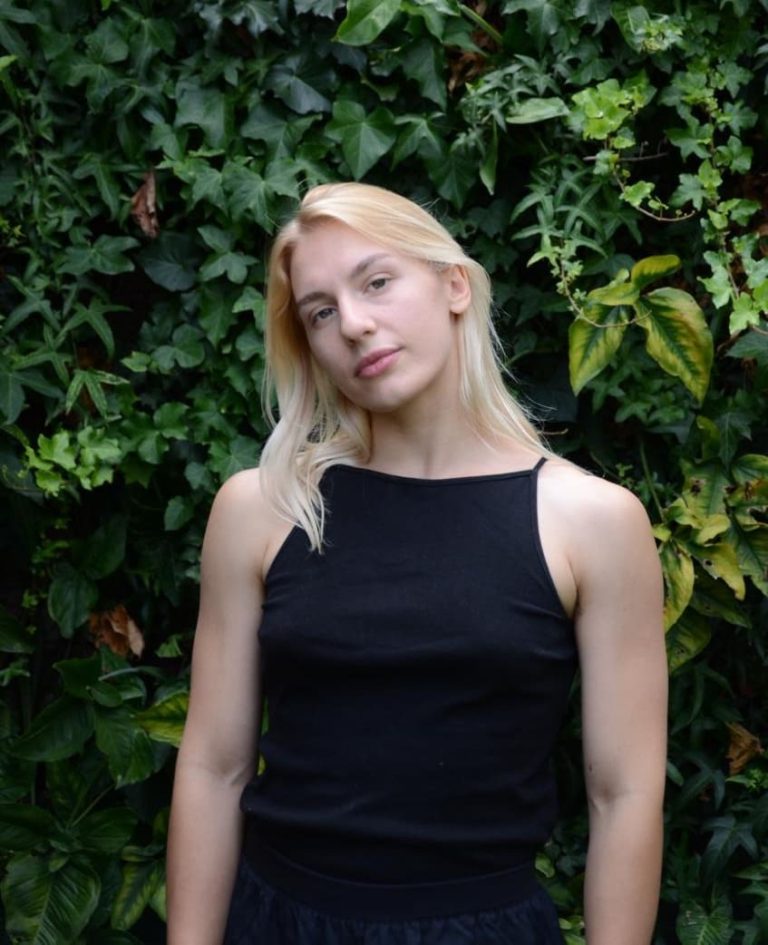
Born in Buenos Aires, Flor Buzzo began studying Aikido, Acrobatics, Contact Improvisation, Contemporary Dance, and Martial Arts as a teenager. She graduated from the University of Circus and Performing Arts at UNSAM in Argentina and later completed a second professional training at the Centre des Arts du Cirque Ésacto'Lido in Toulouse, France. Concurrently, she studied BMC (Body-Mind Centering), Internal Martial Arts, Anatomy of Movement, the Nervous System, and Neuroscience. She has collaborated with several directors and choreographers, co-creating numerous shows and working with companies and festivals in South America and Europe. In 2017, she founded "Flow Force," a name that represents her ongoing research on movement, which she now teaches in France, Spain, Belgium, Germany, Italy, Switzerland, Argentina, Chile, Uruguay, and Brazil.
See the proposal:
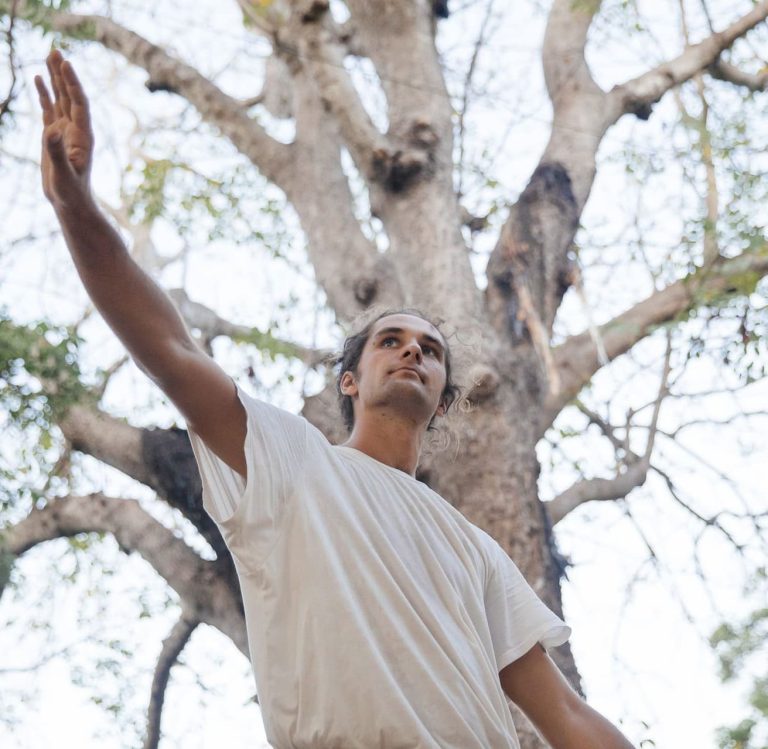
Migue Burkart Noe is a Taoist Integral Therapist, Medicine Man, father, and servant of the Water Message. He holds a degree in Psychology from the University of Buenos Aires (UBA). He specialized in Contemporary Subjectivity at the LWZ Studio. He is a disciple of Master Liu Ming, with whom he trained in various areas of Taoist wisdom: Internal Kung Fu, Chinese Medicine, Bazi (astrology), and I Ching. He is a researcher of Water Medicine. He is the author of the book "Danza Cardumen. El mensaje del agua" (2019), which explores relational reprogramming and the intersection between individual healing and collective transformation through the intersection of art, magic, and politics. He is the creator and coordinator (with Mariela Alvarez) of the project "Danza Cardumen, a research laboratory in aquatic dance." Together with Brian Corin, he coordinates the "Chiagua Unidad Origen" project, a collective investigation into the integration of being through the articulation of Taoist practices and aquatic medicine.
See the proposal:
Dancer, WaterDance® teacher, and Watsu® practitioner with extensive experience in Healing Dance®, Manuela Blanchard has been teaching Contact and Dance Improvisation in nature, studios, and water for 20 years. In 2017, she created "Aquatic Bodywaves," integrating dance improvisation as a more playful and intuitive way to learn aquatic bodywork than traditional water training. Her work intimately connects emotional processes and tantric tools with aquatic research. Her enthusiasm for the organic and expressive qualities of movement has led her to explore Butoh, Authentic Movement, Body-Mind Centering, Synchronized Swimming, and Tango, among other artistic expressions. She is also an Esalen Massage and Tantra teacher with experience in emotional coaching. In addition to her background in social sciences and coaching training in the Learning Love method, Manuela is currently pursuing a degree in Neurodance—a form of art therapy that combines artistic life processes with neuroscience.
See the proposal:
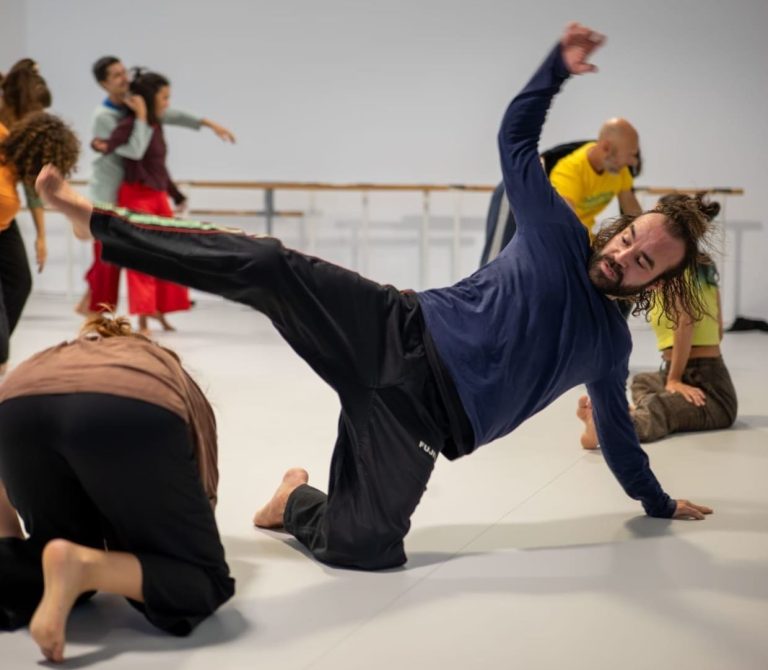
Pedro Serejo is a movement researcher, performer, capoeirista, and clown. He holds a degree in Performing Arts from Faculdade da Cidade in Rio de Janeiro and also graduated from Profac, focusing on ground acrobatics, portagem, and balance. He was a member of the first class of Eslipa – Free Clown School of the Off-Sina Group. He co-created the 1st "Body in Movement" CI and Somatics Meeting. After a serious injury, he began to transform his perspective on the body and movement, immersing himself in somatic practices and studies such as craniosacral therapy, the GDS method, and massage techniques. Already with a solid foundation in capoeira, he found Contact Improvisation a fertile field of research, where he combines his performing and bodywork with play, listening, and presence.
See the proposal:
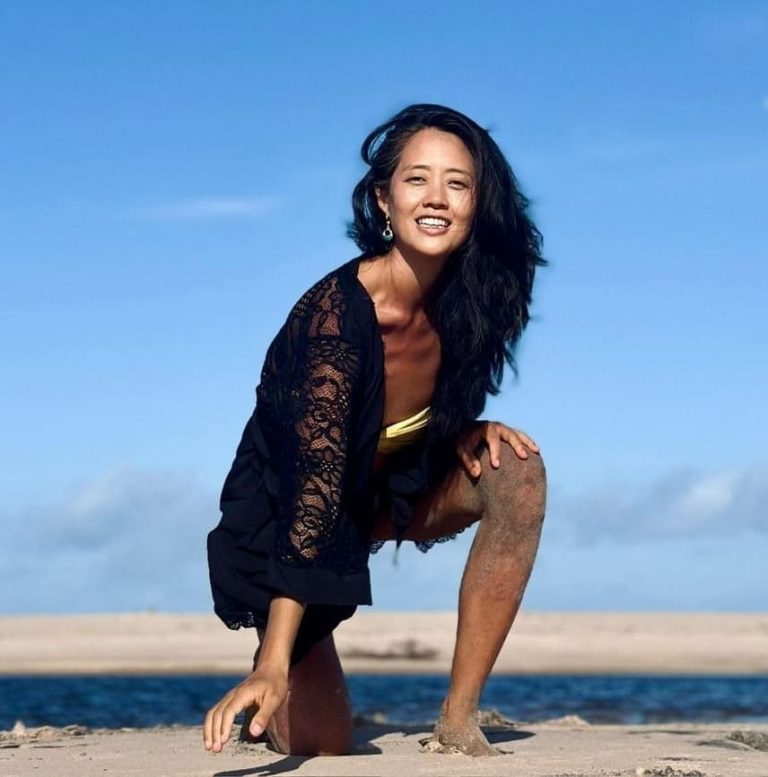
Karin Flores is an Afro-Indigenous woman and a movement researcher for 17 years. She has been facilitating Contact Improvisation since 2013, at festivals and gatherings in Brazil and abroad. Since 2010, she has dedicated herself to the field of conscious sexuality and body awareness practices. She is a somatic therapist in training through the Somatic Experiencing® method, with experience in trauma-informed approaches and personal development.
She works as a bodyworker, creating experiences that explore listening, touch, eroticism, and the power of the body. She organizes Touch & Play Brazil and facilitates international retreats and festivals such as Eros Supernova and Sexsibility.
Her work integrates CI, somatics and sexuality, weaving paths of transformation through the body, presence and sensitivity.
See the proposal:
The packages below includes all activities and delicious vegan food, during the Capão and Pati stages (during the Pre-Festival and on the break days between stages, food is not included).
To make this experience accessible to those who truly resonate with this proposal, we are offering five spots at a 15% discount for Latin America, Africa, and Asian residents facing economic vulnerability.
We also offer 12 vacancies for kitchen and cleaning assistants with discounts of up to 40% for those who want to be part of our team!
If you are looking for these opportunities, please fill in the field provided for this purpose on the application form.
January 19-21, 2026
3 classes x 3 hours
(no food, no accommodation)
R$ 600
January 22-29, 2026
8 days, including classes,
jams and food
(no accommodation)
R$ 2150
February 1-7, 2026
7 days, includes guides,
food and experiences
(with accommodation)
R$ 3100
From January 19 to February 7, 2026
18 days including all activities,
and food during the Practical and Crossing stages
– with accommodation for the Pati Crossing included –
R$ 5500
Accommodation not included, you can choose where to stay.
The Pre-Festival will take place at Pousada Amanhecer, and the Practice stage in Capão will be at Pousada do Capão – both in Vale do Capão. To avoid having to travel daily before and after activities, we suggest staying at the Inns themselves or in the surrounding area (with the possibility of sharing a room with other festival participants).
At Pousada do Capão, we have a beautiful campsite open exclusively for the festival – for those who prefer simplicity and economy.
Below are some hosting contacts.
Accommodation included. The group will be accommodated in shared rooms.
To reach this place so protected by nature, we will walk a little until we reach Igrejinha, the first Visitor Support House on our route, where we will stay for one night.
Afterwards we will head to Casa do Mirante do João, where we will stay the remaining nights.
Maintained by the few guardian families of the local community, these houses reflect the traditional Pati way of life, with simplicity and in direct connection with nature.
The Capão Valley, also known on maps as Caeté Açú, is a district of the municipality of Palmeiras, in Bahia.
Find specific locations:
To arrive at this blessed place called Bahia, you must take one plane to Salvador da Bahia (SSA).
If you come to the Capão and/or Pati stage, you must come to Vale do Capão, and for that there are 2 options:
– The most economical option is to take the bus from Salvador to Palm trees and from there a van to the Vale do CapãoThe 8 a.m. and 11 p.m. buses arrive at times that make it easy to find public transportation directly to Capão. Just get off the bus in Palmeiras, and you'll find the vans/trucks waiting.
– The other option is to fly from Salvador, taking another flight to Lençóis (LEC) and from the airport take a taxi to Vale do Capão.
Yes, you can participate only in the Capão stage or the Pati stage.
Conception and Organization: Julia Limaverde
Communication and Nutrition: Amatista Sofia
Production and Logistics: Jan Cathalá
Photos and videos: Marina Wang, Paz da Mata, Karina Fabrício, Jan Cathalá, Amatista Sofia, Geraldin Acevedo, Eli Hill, Maria de Los Angeles, Carlos Gavina, Sasha Bezrodnova, Julia Limaverde, Eugene Dymohod, Joana Shroeder, Ciro Becker, Felipe Godoi, Olya Glotka, Marina Sekacheva.
Flow Force is a pedagogy with more than 15 years of research on the INTEGRITY, ADAPTABILITY AND MOVEMENT of the body.
Let's investigate the intelligence of bodily INTEGRITY by dancing in the face of change — learning to use it to our advantage, that is, recycling it.
We will study how gravity relates to our skeleton and our fascia in biotensegrity, as well as our ability to respond and relate to it through will and surrender — realizing how, in the integration of opposites, resides the strength of dynamics.
We view movement as the relationship between body, mind and energy. We'll work with tools from somatic practices, addressing concepts of biotensegrity, movement anatomy, and internal martial arts, to approach improvisation and acrobatics with a strong, soft, and available body.
In Pati Valley, we will practice contemplation and listening to external and internal space, and their interrelationships. We will be immersed in nature, where sharpening our senses becomes a delight for exploring our bodies and life.
We'll also work with exercises inspired by internal martial arts practices, where presence, energy, intention, and bodily matter are integrated, interrelated, and in dance. This also includes structure, weight, and the collaboration between body parts.
How can we cultivate the sensitivity of our dance through the Taoist understanding of the body? For millennia, Taoist wisdom has deeply explored the cycles of life and the universe by way of the body. Originating in ancient China, this tradition developed a symbolic language that unites human beings with cosmic totality—the yin‑yang and the Five Elements—expressing nature’s cycles and the body’s subtle flows.
In this seminar, we propose a creative encounter between Taoist Internal Kung Fu and contact improvisation. We will explore essential principles of internal martial arts as tools for movement, refinement of perception, and expansion of consciousness.
We'll explore the yin-yang relationship in the body: creative and receptive; mind and body; matter and energy; action and listening; fullness and emptiness. We'll also cover the four keys of Taoist Internal Kung Fu, the five elements: circulation, vibration, movement, and texture of touch, and the direction of energy through intention.
This is an invitation to an inner journey, where we will explore the resonance of our body's landscapes, in connection with the surrounding nature—each element suggesting different qualities of movement, awakening diverse emotions and stories.
We’ll embrace a sensual and playful approach to the environment, using our skin and senses as interfaces and meeting spaces. Guided improvisation with elements from Contact Improvisation, Butoh, Authentic Movement, and New Dance will accompany us on a journey of discovery between nature’s elements and the worlds of the body.
The earth and stones that embrace our forms open us to subtle touches or, at times, wild body waves, creating spaces for instant group compositions, trusting in the dance that wants to sprout in that instant through us — like human plants.
In this workshop, we will practically explore the possible dialogues between Capoeira Angola and Contact Improvisation. We’ll examine how we can use our energy both to initiate a movement and to move another person, and how we develop clear bodily questions and responses.
We will sharpen our listening, attention, and the quality of presence, transforming the invisible into dance and play. We will explore how imbalance can lead us both to the ground and to flight, and how it is possible to enter while exiting—and exit while entering. Exploring the dialogues between the fundamentals and qualities of different languages and disciplines, we will traverse from acrobatics and carries to the subtlety of a touch, a look, or a breath—always seeking the relationship as the center of movement.
We'll explore the language of CI to explore physicality, the pleasure of movement, and the paths that emerge when we dance together.
Consent is the tool that allows us to navigate this dance in which limits and contours can be subtle, helping us to perceive: what do I want now? Where is my boundary? How do I express a “yes” or a “no” in the dance?
The practice invites us to feel the pleasure of encountering other bodies, bringing bursts of perception about ourselves and others.
I offer a somatic perspective, in which listening to the body guides more conscious relationships, allowing us to experience both freedom of movement and clarity in agreements.
It's an invitation to explore, in a lively and sensitive way: Is it possible to dance with pleasure, presence, and clarity? How can I express my desires and limits? What emerges when body and consent meet in improvisation?
FOR THE PRE-AQUATIC FESTIVAL:
FOR THE PRACTICAL PHASE IN CAPÃO: